






Eating like a local in Dubai: A food trail of Emirati staples and wider Arab comforts


From endless gahwa to balaleet, mandi and everything in between, enjoy Dubai the local way
If you really want to understand Dubai, share a plate. The city does luxury tasting menus better than most, but the soul of the place sits on a carpet, in a family-style platter, in a tiny cup of cardamom coffee poured with the right hand. Since moving here, my Emirati and Arab friends have taken me under their wing, and into their homes and favourite hideaways, teaching me to swap cutlery for fingertips, scoot onto the majlis, and slow down long enough for second helpings and stories. I love food, but I love it even more from floor level: rice steaming my glasses, bread warm enough to sting my fingers a little, and gahwa refills that arrive before I’ve realised I wanted one. This is the way I’m learning to eat in Dubai – unfussy, generous, and proudly rooted in the Gulf.
Breakfast the Emirati way

Start easy with the morning staples locals actually crave. Balaleet (sweet saffron vermicelli crowned with a savoury omelette) tastes like childhood and long weekends. Regag is the crackly-thin griddle bread you’ll see folded with cheese, honey, or egg; chebab is the fluffier cousin, a golden pancake perfumed with saffron and yeast. For a soft landing into tradition, book a courtyard table at Arabian Tea House (@arabianteahouse) or Al Khayma Heritage Restaurant (@alkhayma.ae) in Al Fahidi, or slide into a banquette at Al Fanar (@alfanarrestaurant) or Logma (@logma). Order Arabic coffee (gahwa) and dates to begin, because in this part of the world, you start with hospitality.
Mandi o’clock (come hungry)

If there’s a dish that feels like a communal hug, it’s mandi (or its kin: madfoon/kabsa/machboos), fragrant rice puffed with spices, topped with slow-cooked lamb or chicken, sometimes smoked so the aroma announces itself before the platter lands. You’ll find it all over Dubai at family-run spots in Deira and Karama, and beloved names like Maraheb (@marahebuae), Madfoon Al Sadda (@madfoon_alsadda), or Bait Al Mandi (@baitalmandime). Ask for a side of salata hara and tahini, squeeze a lemon over the rice, and don’t be shy about eating with your hand (right hand only). Sit on the floor majlis-style if there’s space; it’s half the joy.
Sea-to-plate, the old Dubai way
Before skyscrapers, Dubai was a fishing and pearl-diving town, and dinner still tastes of the sea. At Bu Qtair by the fishing harbour in Umm Suqeim 2, you pick your fish, they grill it, and you mop up the juices with paratha while watching boats bob. For a choose-and-cook adventure, head to Waterfront Market Deira, buy the freshest catch on the floor, and have nearby kitchens grill or fry it to order. When in doubt, ask for local species and simple spice rubs, the flavour is in the freshness.
Shawarma, manakish, and the city’s quick fixes

Dubai’s Arab everyday runs on shawarma (yes, even after midnight) and manakish (flatbreads fired with za’atar, cheese, or both if you’re living right). Join the queue at Al Mallah (@almallahuae) in Satwa for a wrap and fresh juice, or duck into a Lebanese bakery for a manakish rolled hot off the stone. It’s not fine dining; it’s the taste of errands, beach days, and long drives home.
Sweet finish: luqaimat and gahwa
If you’ve ever been handed a warm luqaimat – crisp golden dumplings drizzled with date syrup and sesame – you understand happiness. Pair them with gahwa poured from a dallah, perfumed with cardamom and sometimes saffron. In majlis tradition, your cup is intentionally small and refilled often; a gentle shake of the wrist signals “I’m good, thank you.” It’s a ritual that makes time slow down.
A note on how to eat (and be lovely)
Local dining is about togetherness. Elders are served first; the host will insist you take more (and you should, at least once). Use your right hand when eating from a shared platter. If you’re shown a majlis with floor seating, slip off your shoes and settle in. Modest, comfortable clothing fits better in heritage settings than anything you’d wear to a beach club. A simple “shukran” (thank you) and “bil-‘afiya” (to your health) go a long way.
Where to feel the rhythm of Old Dubai
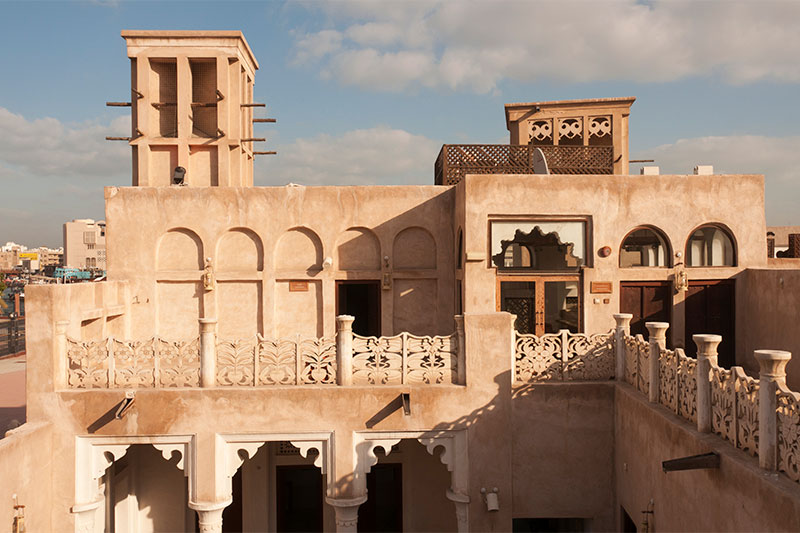
Wander Al Fahidi Historical Neighbourhood for a culture-and-cuisine double bill, wind towers, museums, and heritage restaurants tucked behind blue doors. Cross the Creek by abra to Deira for spice-scented lanes, tiny cafeterias, and mandi joints that have served three generations. Even if you sleep in a shiny new postcode, spend at least one meal in these older quarters; this is the Dubai that fed the Dubai you know.
One last plate

You can eat around the world in this city, but eating like a local is about pace and company as much as recipes. Share the platter, take the second helping, say yes to more coffee. The DJs and tasting menus will still be there tomorrow; tonight, let the rice steam your glasses, let the bread burn your fingertips a little, and let the stories at your table do what they’ve always done in the Gulf, turn strangers into friends.
Images: Getty Images

